Introduction
Fires at materials recovery facilities (MRFs) and waste processing sites aren't just increasing—they're accelerating toward crisis levels. Publicly reported fires reached 448 incidents in 2025, marking a 26% increase compared to 2016-2021 averages, with estimated total damage of $2.5 billion across the US and Canada. The primary culprit is lithium-ion batteries—damaged, crushed, or overheated devices entering the waste stream trigger thermal runaway (uncontrolled, self-sustaining heat escalation) that spreads in seconds and resists conventional firefighting.
Most facility managers are dealing with the same dangerous combination:
- Rising contamination from battery-powered consumer electronics in the waste stream
- Inadequate intake screening that lets compromised cells through
- Detection systems that only trigger after visible flames appear
By that point, the damage is already done. This guide covers how to identify ignition risks earlier, what detection technologies actually work in MRF conditions, and how to build a fire prevention plan that holds up under NFPA and local compliance requirements.
Key Takeaways
- Lithium-ion batteries cause thermal runaway—the leading ignition source at MRFs heading into 2026
- Other common triggers: pressurized aerosol cans, propane remnants, hot loads arriving with incoming waste, and electrical equipment failures
- 2025 saw $2.5 billion in fire losses across 448 incidents, including approximately 100 catastrophic events
- Effective prevention combines intake screening, thermal monitoring, suppression systems, and staff training
- Fixed thermal cameras detect heat signatures minutes before visible flames appear—enabling automated alerts and fast response
Common Causes of Fires in Waste and Recycling Facilities
MRF fires don't start randomly. They stem from predictable ignition sources that facility managers can identify and control—but only if they know what to look for and act before materials reach high-risk processing zones.
Lithium-Ion Battery Contamination
Damaged, crushed, or overheated lithium-ion batteries undergo thermal runaway—a self-sustaining chemical reaction that generates its own oxygen, produces intense heat, and is extremely difficult to extinguish once started. This hazard is growing as electronics and e-waste volumes increase.
The typical scenario unfolds fast: a battery concealed in a discarded device reaches a sorting conveyor, gets compressed or struck by machinery, and ignites within seconds. The EPA's 2021 study documented 245 fires caused by lithium-ion batteries at 64 waste facilities across 28 states, with incidents growing from 2 fires in 2013 to 65 fires in 2020. Of these, 68 fires occurred at MRFs—and 78% required emergency responders.
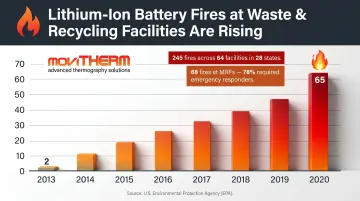
Multi-cell battery packs enter thermal runaway sequentially, causing re-ignition after initial suppression. The reaction produces toxic gases—including hydrogen fluoride, hydrogen chloride, and hydrogen cyanide—that complicate both suppression and worker safety.
The contamination problem extends beyond traditional electronics. An estimated 1.2 billion vaping devices enter waste and recycling streams annually, with almost no drop-off points in the US.
Improper Disposal of Flammable and Pressurized Materials
Pressurized aerosol cans, propane remnants, alcohol-based hand gels, and ignitable liquids that slip through intake screening combust when exposed to heat, friction, or compression on sorting lines. These materials arrive unlabeled and spread fire rapidly across adjacent combustible piles.
Hazardous materials that regularly enter MRFs include:
- Spray paint cans and pressurized aerosols
- Propane tanks (even a "tiny flare" in a 5 mph wind can cause rapid fire escalation)
- Flammable liquids and gasoline
- Nitrates, corrosives, and organic peroxides
- Disposable vaping devices classified as biohazards
By the time these materials reach a sorting conveyor, there's no way to visually distinguish them from ordinary waste—making intake screening the only effective control point.
Hot Loads in Collection and Transfer
A "hot load"—waste that is already smoldering, emitting heat, or close to ignition when it arrives—is a significant ignition vector. These loads often originate from improperly disposed hazardous items like charcoal, chemicals, or damaged batteries in collection vehicles.
Hot loads are difficult to identify visually and pose danger both in transit and upon unloading. The EPA study documented 15 transportation fires in trucks and trains caused by lithium-ion batteries during the study period. Processing equipment can also trigger thermal runaway in batteries that arrived intact, effectively creating an internal hot load scenario. Equipment types that commonly initiate ignition include:
- Crushing machines and shredders
- Sorting screens and glass breakers
- Balers and front-end loaders
- Conveyor belts generating friction heat
Electrical Equipment Failures and Hot Work
Aging conveyor belts, motors, and sorting machinery generate friction heat. Electrical faults or sparks during welding and maintenance (hot work) provide ignition sources in facilities full of combustible material.
Without active monitoring for electrical hot spots, overheating equipment smolders undetected in a high-dust, high-paper environment—often until a fire is already underway. NFPA 51B requires fire watch during and for a minimum of 30 minutes after hot work, including any breaks. OSHA mandates a hot work permit system referencing this standard.
Friction or contact with machinery—including front-end loaders, conveyor belts, screens, and glass breakers—can trigger battery ignition even when the battery wasn't visibly damaged upon arrival.
What Happens When Fire Risks Are Left Unchecked
The cascading consequences of an MRF fire include immediate infrastructure loss, environmental liability, and potential permanent closure under health and safety orders. The Republic Services facility in Plano, Texas cost more than $30 million to repair and reopen following a December 2016 fire likely caused by a lithium-ion battery. The facility was destroyed, and rebuilding took over two years.
Environmental liability from toxic smoke and runoff is severe. MRF fires release lead, mercury, cadmium, polyvinyl chloride (PVC), phthalates, zinc, chromium, beryllium, nickel, and tin. Lithium-ion battery fires add hydrogen fluoride, hydrogen chloride, hydrogen cyanide, phosphoryl fluoride, carbon monoxide, and black carbon to that list.
The March 2026 fire at Kalamazoo Metal Recyclers required over 1 million gallons of water and 10+ hours of active firefighting. Elevated PM2.5 levels were recorded, and regulators demanded full air, water, and soil contamination evaluations.
Operational and financial ripple effects extend beyond the fire itself:
- Insurance market collapse: Coverage options dropped from nearly 50 to fewer than 10 carriers in three years
- Premium increases: The Shoreway Environmental Center saw its annual premium increase six-fold after its 2016 fire
- Legal exposure and regulatory scrutiny: Permanent closure under hazardous waste violations
- Extended downtime: Months of lost revenue while the facility remains offline
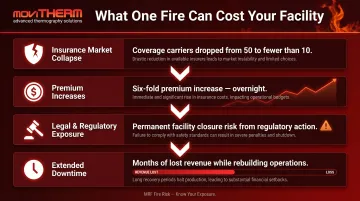
Individual catastrophic events range from $500,000 to tens of millions of dollars. Even small smoke events or line shutdowns carry real costs — which is why recognizing the warning signs early matters as much as the suppression equipment itself.
Warning Signs a Fire Is About to Break Out
These are the observable signals that a fire risk is building — most are detectable before any flame appears.
Thermal warning signs:
- Unexplained heat concentrations in material piles or on conveyor belts
- Visible smoldering or steam rising from incoming loads
- Equipment surfaces running hotter than normal baseline
- Fixed thermal cameras detect all three automatically and continuously, without relying on manual rounds
Operational and material warning signs:
- Incoming loads that smell of burning or contain damaged electronics
- Pressurized containers that have been deformed or pierced
- Sorting line jams that generate friction heat in combustible material
How to Prevent and Control Fires at Waste and Recycling Facilities
Fire prevention at recycling facilities is a layered strategy — no single measure is sufficient on its own. Facilities that combine intake controls, detection technology, suppression systems, and trained personnel are the best protected against catastrophic loss.
Strengthen Intake Screening and Materials Inspection
Implement visual inspection protocols at intake points to flag and quarantine hazardous items—battery-containing devices, pressurized containers, and flammable liquids—before they enter the sorting process.
Key compliance frameworks include:
- NFPA 400 (Hazardous Materials Code): Applies to facilities handling nitrates, corrosives, organic peroxides, and reactive metals
- NFPA 30 (Flammable and Combustible Liquids Code): Industry standard for flammable liquid handling and storage
- International Fire Code (IFC) Section 304: Addresses storage and accumulation of combustible waste, prohibiting unsafe accumulation and requiring outdoor storage at least 5 feet from combustible walls
Following these standards provides legal defensibility in the event of an incident. More importantly, intake screening is the highest-leverage prevention step because it stops ignition sources before they ever reach high-risk areas.
Deploy Continuous Thermal Imaging for Early Hot Spot Detection
Thermal imaging cameras mounted over conveyor belts, sorting areas, and outdoor material piles detect abnormal heat signatures—including battery thermal runaway and friction-generated heat—long before visible flames or smoke appear.
MoviTHERM's industrial thermal monitoring systems, including our iTL cloud-based platform, allow facilities to set automated temperature alarms and receive 24/7 alerts via text, voice, or email — enabling immediate response without constant human observation. Facilities using thermal detection consistently report catching fires at the incipient stage, when suppression takes seconds instead of hours.
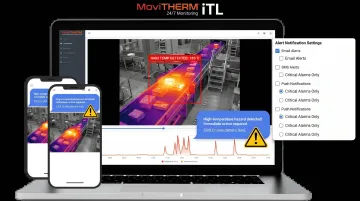
When to implement thermal monitoring:
- High-throughput MRFs handling e-waste
- Mixed residential recyclables processing
- Paper/cardboard-heavy streams where fire can spread rapidly
- Facilities with history of near-miss incidents or hot load events
Install and Maintain Fire Suppression Systems
Automatic suppression systems—sprinklers and foam suppression for battery fires—contain fires before they spread. Suppression systems must be maintained regularly and rated appropriately for the materials present.
Key suppression guidelines:
- NFPA 855 sprinkler density: 0.3 gpm/sq ft over 2,500 sq ft design area for indoor lithium-ion battery storage
- Dry fire suppression systems for cold climates with low point drain management
- Sand or vermiculite in 5-gallon metal buckets for smothering battery fires
- High-volume water cannons on tipping floors to inundate nascent fires
Suppression systems work best when paired with early detection. If a fire has already grown large by the time suppression activates, control becomes significantly harder. The "one fire extinguisher rule" applies: facilities should develop a policy for a single attempt to extinguish an incipient fire; if unsuccessful, call 911 and evacuate.
Train Staff and Establish Hot Load Protocols
Collection drivers must be trained to identify and isolate potentially smoldering loads before entering the facility. Facility staff should be empowered to quarantine and assess suspicious incoming material.
Practical hot load response procedure:
- Visual and thermal inspection at the point of arrival
- Isolation protocol for suspect loads in designated quarantine areas
- Assessment by trained personnel before proceeding to processing
- Documentation of all hot load incidents for trend analysis
Regular fire response drills and hot work permit programs build a facility-wide safety culture where every worker knows their role in detection and early response. OSHA 29 CFR 1910.39 requires a written fire prevention and response plan at all facilities.
Tips for Long-Term Fire Prevention and Control
One-time fixes don't hold. These habits build the kind of ongoing risk reduction that compounds over time:
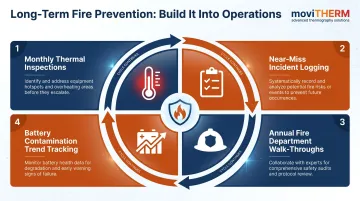
- Conduct monthly thermal inspections of electrical equipment and conveyor systems to catch degradation before it becomes a heat source
- Log all near-miss incidents, hot load events, and identified hazardous materials to build a facility-specific risk profile and inform protocol improvements
- Schedule annual joint walk-throughs with your local fire department so responders know your facility layout and material hazards before an emergency happens
- Track battery contamination trends in incoming loads — then use that data to push haulers, municipalities, and producers for better pre-sort separation and consumer education upstream
Conclusion
Fires at waste and recycling facilities have identifiable, manageable causes. Facilities equipped with the right intake controls, detection systems, and trained teams are far better positioned to prevent catastrophic events.
Proactive investment in fire prevention consistently costs far less than the financial, legal, and environmental toll of a single major fire. Thermal monitoring, staff protocols, and intake controls are not expensive upgrades — they're the difference between a near-miss and a multi-million-dollar loss.
With fire incidents reaching record highs in 2025 and lithium-ion battery contamination still accelerating, the window to act is now. Facilities that implement continuous thermal surveillance today are the ones that stay operational tomorrow.
Frequently Asked Questions
What are the key principles of fire prevention and control in the waste and recycling industry?
Fire prevention follows a layered approach: controlling what enters the facility through intake screening, detecting heat anomalies early through thermal monitoring, maintaining suppression systems, and training staff on response protocols. NFPA and IFC standards provide the compliance framework for each of these layers.
How do lithium-ion batteries cause fires at recycling facilities?
Physical damage from sorting equipment triggers thermal runaway—a self-sustaining chemical reaction that generates its own oxygen and intense heat, making it extremely difficult to extinguish. This risk is growing as more battery-powered devices enter the waste stream, with batteries often concealed inside discarded electronics.
What are the warning signs of a fire starting at a waste or recycling facility?
Early indicators include unusual heat concentrations in material piles, smoldering or steam from incoming loads, deformed pressurized containers, and equipment surfaces running hotter than baseline. All of these are detectable before visible flames appear — giving facility staff time to intervene before a smolder becomes a structure fire.
What fire detection technology works best for MRFs and recycling plants?
Continuous thermal imaging cameras integrated with automated alert systems are best suited for MRF environments. They detect heat anomalies 24/7 without requiring constant human observation, and unlike smoke detectors, they function reliably in the dusty, low-light conditions typical of active sorting floors.
What regulations govern fire safety at waste and recycling facilities?
NFPA 400 (Hazardous Materials Code), NFPA 30 (Flammable and Combustible Liquids Code), and the International Fire Code (IFC) are the primary frameworks. Facilities should verify compliance with local fire authority requirements as well, as some jurisdictions have more stringent standards.
How much can a fire at a recycling facility cost in total damages?
Direct costs span facility repair (individual incidents have exceeded $30 million), environmental cleanup, insurance increases or coverage refusal, legal liability, and extended downtime. The 2025 industry total reached $2.5 billion across 448 reported fires.