What is condition monitoring for rotating equipment?
Condition monitoring for rotating equipment is the ongoing measurement of asset health indicators to detect developing problems before failure. For motors, pumps, bearings, fans, and gearboxes, this often includes tracking temperature trends, vibration, load, and operating patterns. A thermal monitoring approach helps teams spot overheating, imbalance-related heat buildup, friction, or electrical issues early so maintenance can be scheduled before unplanned downtime occurs.
What is IoT condition monitoring?
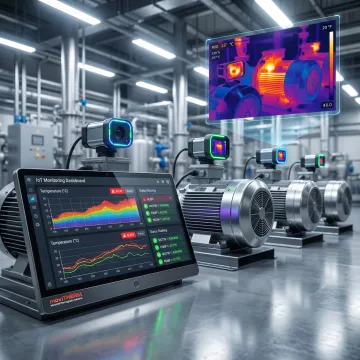
IoT condition monitoring uses connected sensors and devices to collect equipment health data continuously and send it to a centralized platform for analysis, trending, and alerts. In MoviTHERM's case, thermal imaging devices can feed remote dashboards with real-time temperature information, alarm thresholds, and historical trends. This gives maintenance teams anytime access to asset conditions without relying only on manual inspections or route-based checks.
What is IoT based condition monitoring of electrical equipment?
IoT-based condition monitoring of electrical equipment uses connected monitoring devices to watch for abnormal operating conditions such as overheating components, loose connections, overloaded circuits, or insulation-related issues. Thermal imaging is especially effective because it detects heat signatures without contact. By sending thermal data and alerts to a remote platform, teams can identify risks earlier, improve safety, and prioritize corrective action before outages or equipment damage escalate.
What types of rotating equipment can be monitored?
An IoT condition monitoring platform can be applied to many rotating assets, including motors, pumps, fans, blowers, compressors, conveyors, bearings, and gear-driven systems. Thermal monitoring is especially useful where overheating is an early symptom of friction, misalignment, lubrication issues, electrical loading, or mechanical wear. The right setup depends on asset criticality, line of sight, enclosure needs, and how quickly temperature changes must be detected.
How does thermal monitoring help prevent equipment failure?
Thermal monitoring helps prevent failure by identifying abnormal heat patterns before they become breakdowns, safety hazards, or production interruptions. Rising temperatures can indicate bearing friction, motor overload, poor lubrication, electrical resistance, or airflow problems. Because infrared monitoring is non-contact and continuous, teams can catch changes earlier than with occasional manual checks alone. That supports faster intervention, better maintenance planning, and fewer costly emergency repairs.
Can the platform send automatic alerts?
Yes. MoviTHERM's monitoring approach supports 24/7 alerts delivered by text, voice, and email when thermal thresholds or abnormal trends are detected. This allows maintenance and operations teams to respond quickly, even when equipment is in remote, hazardous, or difficult-to-access areas. Alerts can be paired with thermal images and trend data so personnel can assess severity, verify conditions, and decide whether immediate shutdown or scheduled service is appropriate.
Is thermal condition monitoring better than manual inspections?
Thermal condition monitoring is often more effective than manual-only inspections because it provides continuous visibility instead of isolated snapshots. Manual inspections still have value, but they can miss intermittent overheating events that occur between rounds. Thermal systems also inspect without contact, require no gels or couplants, and can complete checks in seconds to minutes. Used together, automated monitoring and targeted inspections create a stronger predictive maintenance strategy.
How is a custom monitoring solution implemented?
Implementation typically starts with reviewing the equipment, failure risks, monitoring goals, and site constraints. MoviTHERM then helps define camera selection, mounting positions, coverage design, networking, alarm logic, and software integration. Once deployed, the system provides remote access to thermal images, trends, and alerts for ongoing monitoring. This tailored approach is important because rotating equipment layouts, environmental conditions, and maintenance workflows vary significantly from one facility to another.