What are the 4 types of temperature sensors?
The four common temperature sensor types are thermocouples, RTDs, thermistors, and infrared sensors. Thermocouples handle wide temperature ranges, RTDs offer strong accuracy and stability, thermistors are highly sensitive in narrower ranges, and infrared sensors measure temperature without contact. For high-temperature process monitoring, infrared thermal imaging is especially valuable because it captures heat patterns across entire surfaces in real time.
How does high-temperature process monitoring work?
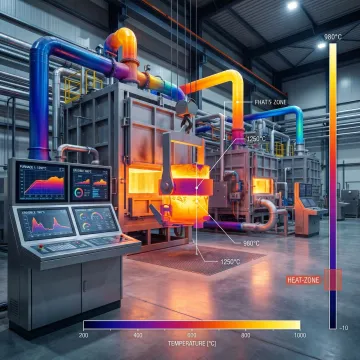
High-temperature process monitoring uses infrared cameras and thermal imaging systems to continuously measure surface temperatures and detect abnormal heat patterns. These systems can be installed for fixed monitoring or integrated with IoT platforms for remote access, alarms, and trend analysis. The result is faster detection of hotspots, better process visibility, and earlier intervention before overheating causes downtime, defects, or safety incidents.
What industries benefit most from high-temperature process monitoring services?
These services are especially valuable in manufacturing, battery production, utilities, recycling, logistics, aerospace, electronics, food processing, and energy operations. Any environment with critical heat-generating equipment, thermal processing, or fire risk can benefit. Thermal monitoring helps these industries improve uptime, verify process consistency, detect hazards early, and support safer operations without interrupting production or requiring direct contact with hot equipment.
Can thermal monitoring help prevent equipment failures?
Yes. Thermal monitoring identifies abnormal temperature trends that often appear before mechanical or electrical failure occurs. By spotting overheating bearings, motors, electrical connections, battery cells, or process equipment early, teams can schedule maintenance before a breakdown happens. This predictive approach reduces emergency repairs, limits unplanned downtime, and helps protect both equipment and personnel in high-temperature operating environments.
Is infrared monitoring safe for high-temperature inspections?
Infrared monitoring is a safe, non-contact inspection method that allows operators to assess hot equipment from a distance. It does not require gels, couplants, or ionizing radiation, making it well suited for demanding industrial environments. Because inspections can often be completed in seconds or minutes, thermal imaging also reduces exposure time around hazardous equipment while improving the speed and consistency of temperature assessments.
Can I monitor thermal data remotely?
Yes. IoT-enabled thermal monitoring systems can provide remote access to live images, temperature trends, and automated alerts through connected software platforms. This allows teams to review conditions from virtually anywhere and respond quickly when thresholds are exceeded. Remote monitoring is especially useful for unattended assets, multi-site operations, and facilities that need continuous oversight outside normal staffing hours.
How quickly can a thermal monitoring system be deployed?
Deployment time depends on the application, coverage requirements, mounting conditions, networking, and alarm integration needs. Straightforward monitoring points can be implemented relatively quickly, while larger multi-camera systems require more planning and configuration. MoviTHERM supports the process with guidance on camera selection, coverage design, and integration so engineering teams can move faster and avoid delays caused by mismatched hardware or incomplete system planning.
What should I look for in a high-temperature process monitoring provider?
Look for a provider with deep thermal imaging expertise, experience in industrial environments, flexible hardware options, and the ability to integrate cameras, alarms, networking, and software into one solution. Strong technical support also matters, especially for complex applications. A specialist like MoviTHERM can help align the monitoring system with your process conditions, safety goals, and long-term reliability requirements rather than offering a generic setup.