What are thermal emission imaging system services?
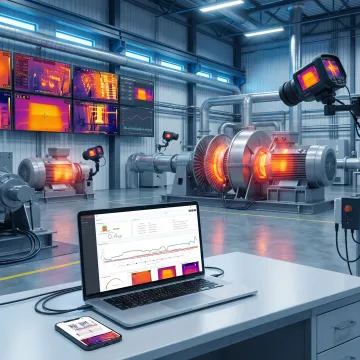
Thermal emission imaging system services use infrared cameras, software, and system integration to detect, measure, and monitor heat patterns across equipment, processes, and facilities. These services can support continuous condition monitoring, early fire detection, non-destructive testing, and quality inspection. MoviTHERM also helps with camera selection, mounting, networking, alerts, and software integration so the system fits the application instead of forcing a generic setup.
What industries use thermal emission imaging systems?
Thermal emission imaging systems are widely used in manufacturing, utilities, battery production, aerospace and defense, logistics, recycling, oil and gas, food processing, and electronics. They are valuable anywhere abnormal heat can signal a defect, safety risk, or pending failure. MoviTHERM supports applications such as industrial condition monitoring, warehouse fire detection, battery lifecycle monitoring, data center protection, and composite inspection.
Can thermal imaging help prevent equipment failures?
Yes. Thermal imaging can identify overheating bearings, motors, electrical connections, transformers, servers, and other critical assets before failure occurs. By tracking temperature trends and spotting abnormal heat signatures early, teams can schedule maintenance before a breakdown causes downtime or damage. This makes thermal monitoring especially useful for preventive maintenance programs where speed, repeatability, and non-contact inspection are important.
How is thermal imaging used for fire detection?
Thermal imaging detects heat buildup and hotspots before smoke or flames become visible, making it highly effective for early fire detection. It is commonly used in warehouses, landfills, battery storage areas, bulk material piles, substations, and data centers. Continuous monitoring systems can trigger alerts through text, voice, or email when temperatures exceed thresholds, helping teams respond faster and reduce the risk of major incidents.
What is the difference between thermal monitoring and active thermography?
Thermal monitoring focuses on observing temperature conditions over time to detect abnormal heat patterns in operating equipment or facilities. Active thermography, by contrast, is a non-destructive testing method that applies stimulation and analyzes the thermal response to reveal subsurface flaws. MoviTHERM offers both, allowing customers to address ongoing condition monitoring needs as well as detailed inspection of composites, electronics, and other critical components.
Can MoviTHERM provide custom thermal imaging solutions?
Yes. MoviTHERM offers custom consultation to design thermal imaging systems around specific operational goals, asset layouts, and risk conditions. That can include selecting the right infrared camera, planning coverage, integrating alarms and networking, and configuring software for remote access or trend analysis. This approach is especially useful for facilities with unique inspection challenges, multiple monitoring zones, or specialized compliance and safety requirements.
Are thermal emission imaging systems suitable for remote monitoring?
Yes. Many thermal emission imaging systems can be configured for remote access, continuous surveillance, and automated alerting. MoviTHERM’s IoT-enabled monitoring solutions allow users to review thermal images, analyze trends, and receive notifications from virtually anywhere. Remote monitoring is particularly valuable for unattended sites, critical infrastructure, battery storage, and industrial operations where early awareness of temperature changes can prevent costly disruptions.
How quickly can thermal inspections be performed?
Thermal inspections are typically much faster than many traditional inspection methods because they are non-contact and can scan large areas in seconds to minutes. MoviTHERM notes that certain inspections can be completed up to 10 times faster than ultrasound, without gels or couplants. That speed helps reduce bottlenecks, improve throughput, and make routine inspections easier to perform consistently across production and maintenance environments.