Browse all MIO Intelligent I/O Modules
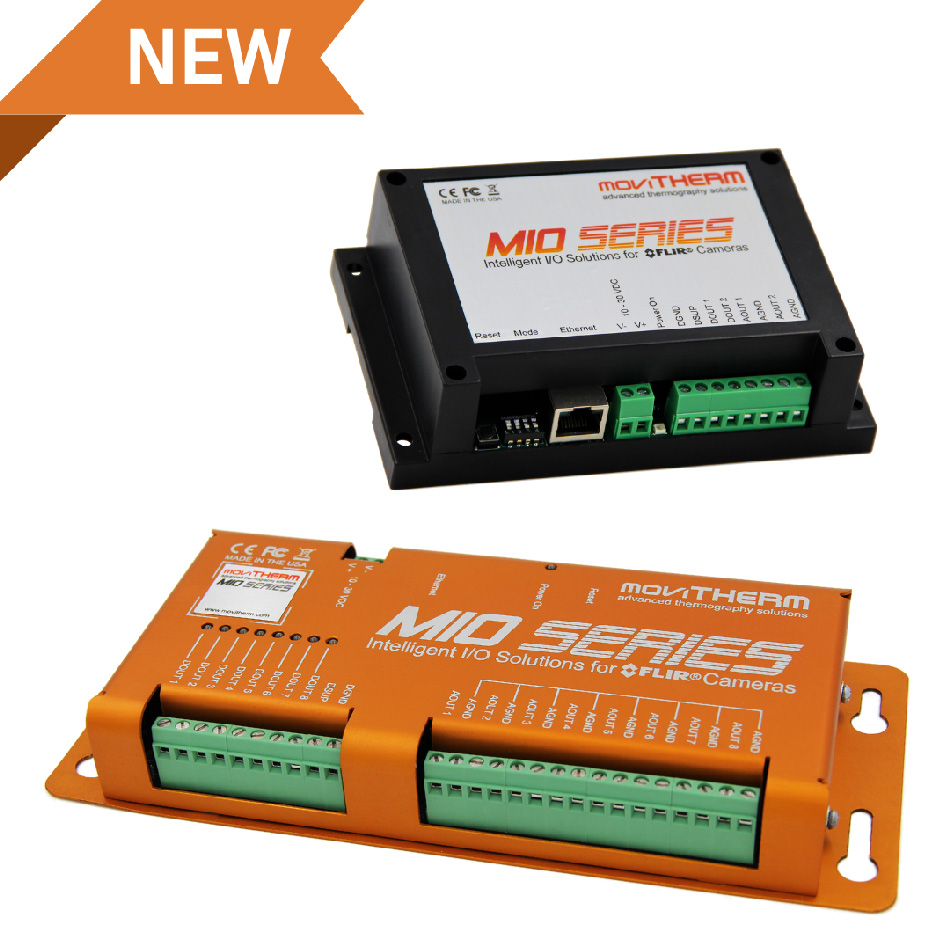
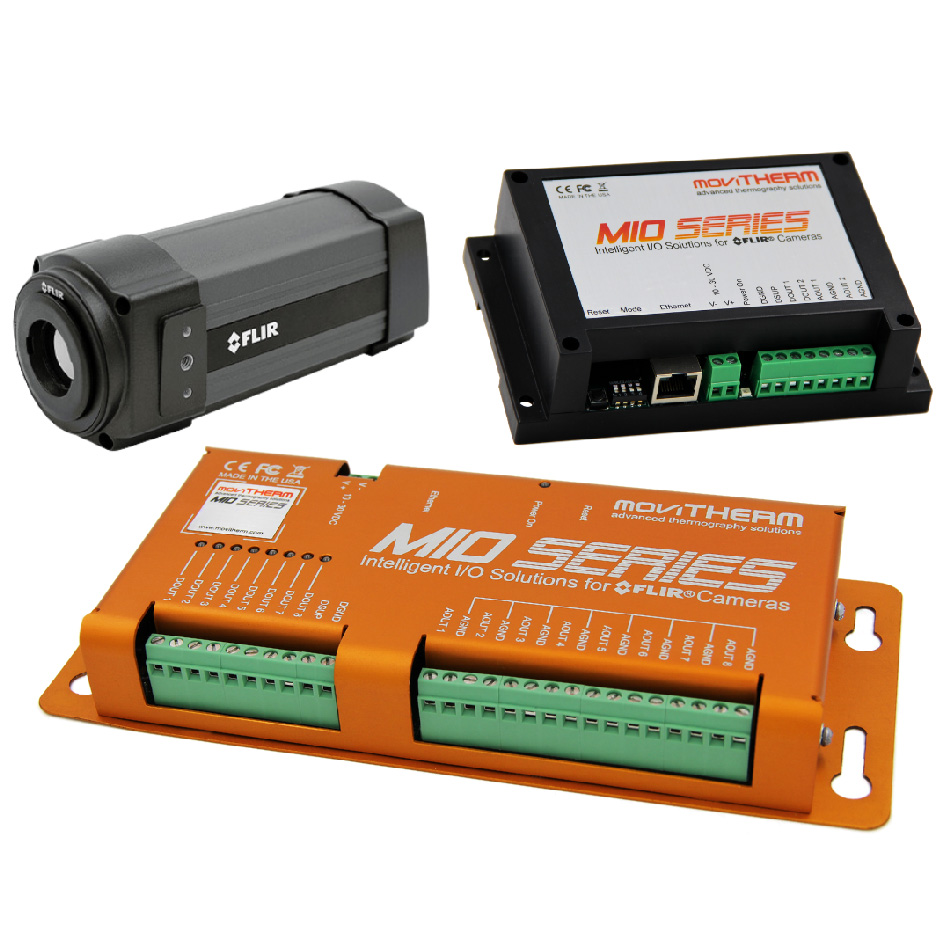
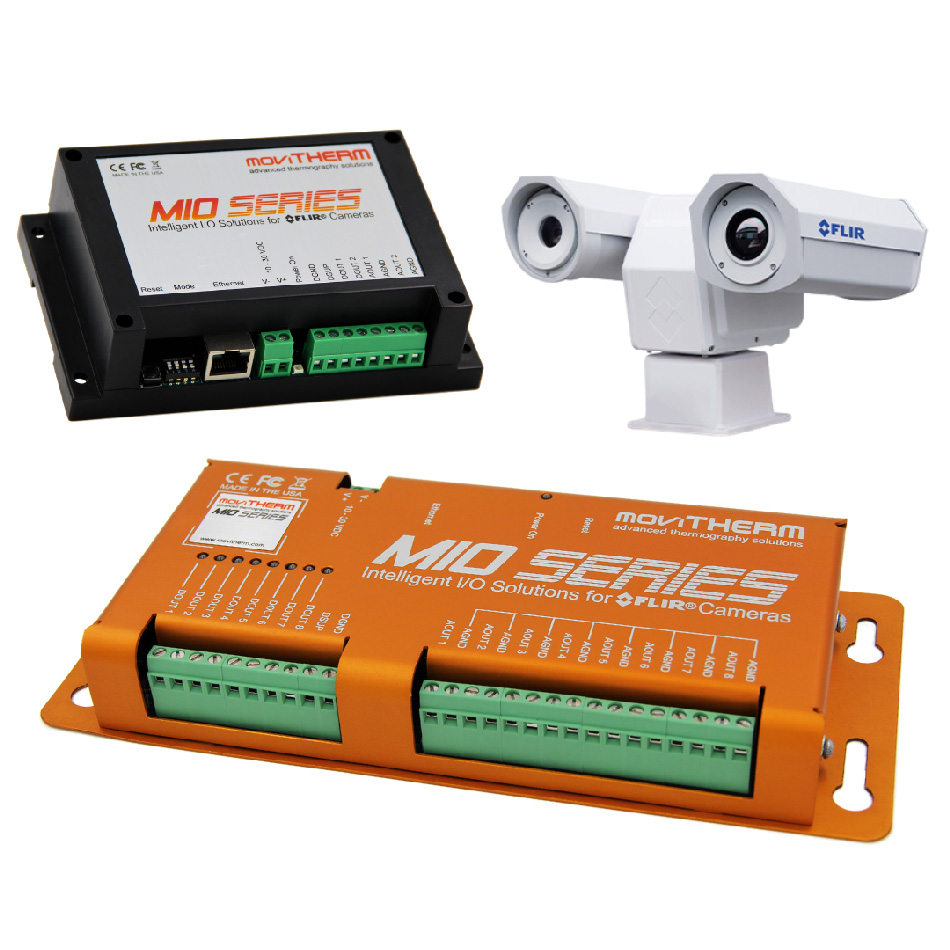
MIO Intelligent I/O modules turn Flir thermal cameras into fully automated monitoring systems. Instead of relying on PCs, servers, or custom software, these compact Ethernet controllers provide direct alarm outputs and 4–20 mA signals based on temperature events. The result is simpler integration, faster deployment, and reliable real-time control for condition monitoring, early fire detection, and industrial processes.
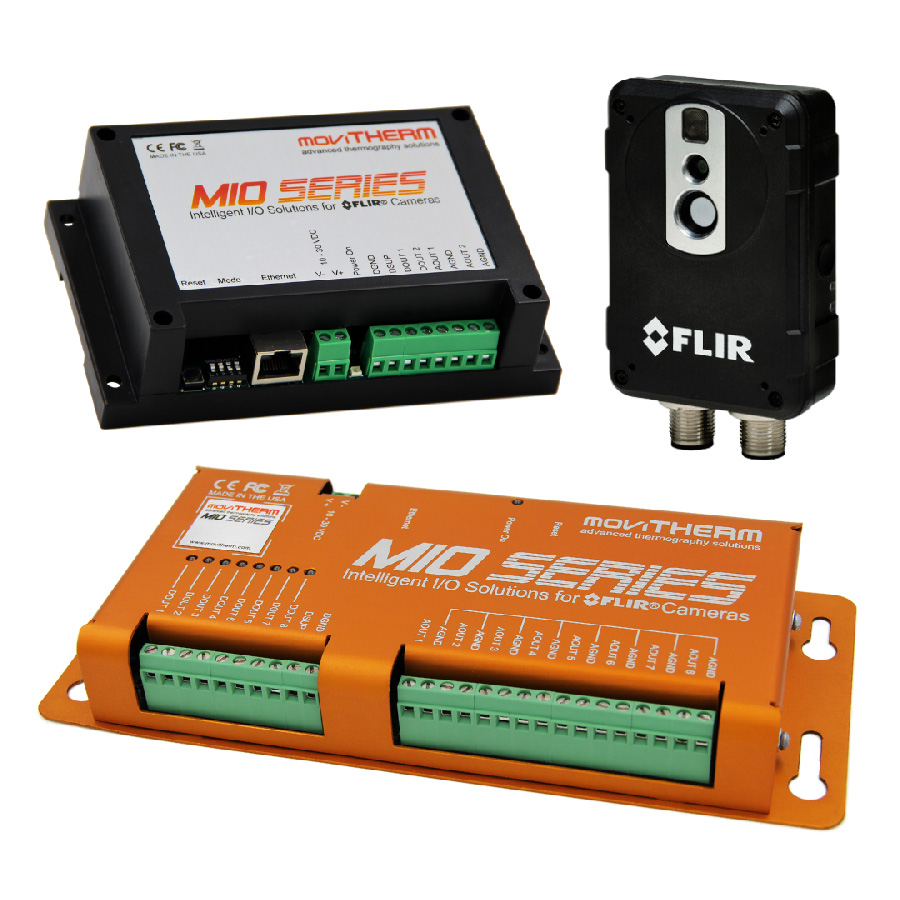
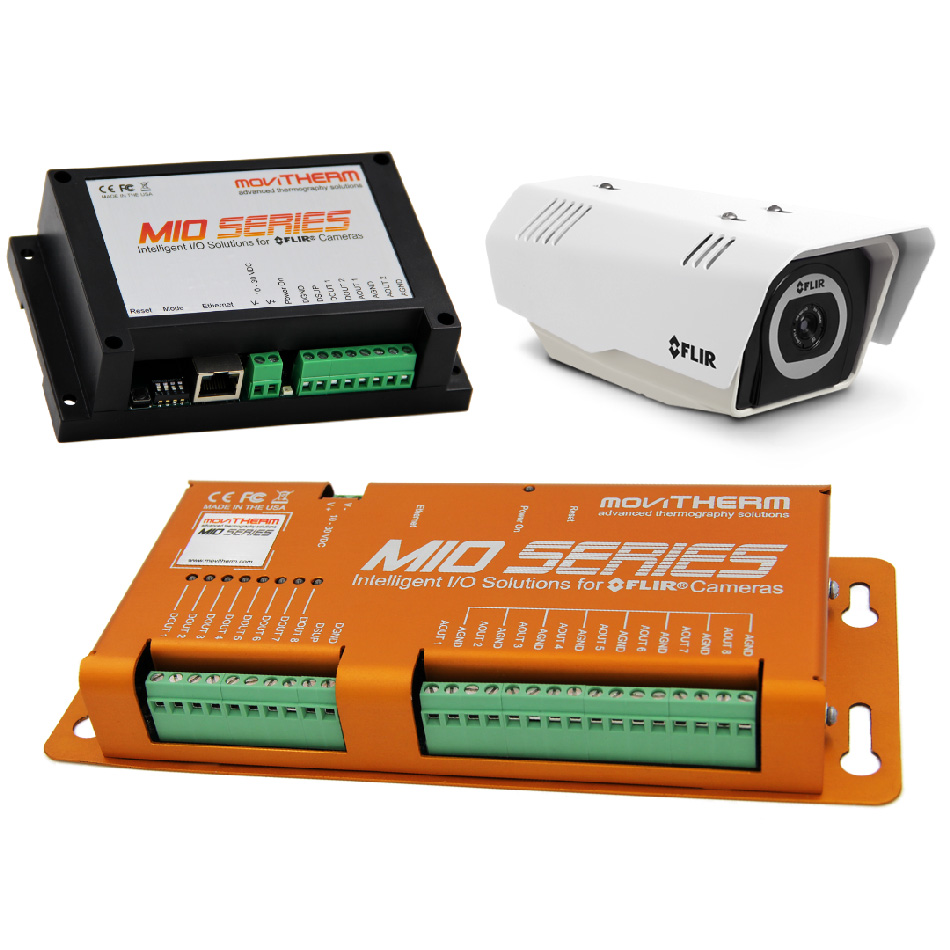
Shop by Category
MIO Intelligent I/O Modules for Automated Thermal Monitoring and Alarm Integration
Intelligent Multi-Sensor Solution for Flir Automation Cameras
Thermal cameras detect temperature changes with precision.
They identify hotspots, overheating equipment, and early fire risks long before problems become visible.
But detection alone is not enough.
Without a way to automatically trigger alarms, outputs, or control systems, thermal data often requires a PC, custom software, or manual intervention to be useful. That adds complexity, cost, and additional failure points.
For many facilities, the challenge is not seeing the heat.
It is turning that information into immediate action.
How MIO Intelligent I/O Modules Work
moviTHERM MIO Intelligent I/O modules act as the bridge between thermal cameras and the rest of the control system.
Each module connects directly to cameras over Ethernet and continuously monitors temperature events. When thresholds are exceeded, the module automatically triggers digital outputs or analog signals without the need for an external computer.
This allows thermal events to immediately:
- activate alarms
- signal PLCs
- drive relays
- send 4–20 mA outputs
- integrate with facility controls
All configuration is handled through a built-in web interface, eliminating additional software or servers.
Key Capabilities And Features
MIO modules are designed for reliable industrial operation and simple deployment.
- Ethernet-based connectivity
- Digital alarm outputs
- Isolated 4–20 mA analog outputs
- Browser-based configuration
- Support for multiple cameras per module
These features reduce system complexity while increasing reliability.
Common Industrial Applications
MIO Intelligent I/O modules are commonly used in:
Condition Monitoring
Trigger alerts when motors, bearings, or electrical components overheat.
Early Fire Detection
Activate alarms or suppression systems when abnormal heat is detected.
Process Control
Send temperature signals directly to PLCs for automated adjustments.
Remote Monitoring
Provide local decision-making without relying on centralized servers.
Infrastructure Protection
Enable real-time response at substations, recycling facilities, storage yards, and critical assets.
Integration With PLCs, SCADA, And Monitoring Systems
Industrial environments often require direct communication with existing control architectures.
MIO modules provide standard I/O and analog signaling that integrates easily with:
- PLCs
- SCADA systems
- HMIs
- relays and alarms
- facility automation systems
This approach keeps systems simple and predictable, avoiding custom middleware or complex software stacks.
Selecting The Right MIO Module
Choosing the correct configuration depends on:
- number of cameras
- required digital outputs
- number of analog channels
Matching the module to these requirements ensures reliable operation and long-term scalability.
The Outcome
Instead of building complex PC-based monitoring systems, temperature events can directly trigger action.
Fewer components.
Less wiring.
Less maintenance.
Faster response.
Thermal monitoring becomes automatic rather than manual.